 Verified Profile!
 Donate
Morse code stands as one of the most remarkable inventions in the history of human communication. Developed during the nineteenth century through the groundbreaking efforts of Samuel Morse and other contributors to telegraph technology, it completely transformed the way people exchanged information across long distances. Before Morse code existed, sending messages between distant locations depended mainly on physical transportation methods such as letters, messengers, ships, and railway couriers. Important information could take days, weeks, or even months to reach its destination, creating major challenges for governments, businesses, military organizations, and ordinary people.
The introduction of Morse code changed communication forever by creating a simple yet powerful system that converted written language into patterns of short and long signals known as dots and dashes. These signals could travel through electrical wires, sound waves, flashes of light, radio transmissions, and other forms of communication. For the first time in history, messages could move almost instantly across enormous distances, creating a new era where information traveled faster than physical transportation. This breakthrough became one of the earliest foundations of modern telecommunications and influenced many technologies that followed.
The brilliance of Morse code lies in its simplicity and efficiency. Instead of requiring complex equipment or advanced technology, it used a structured system where every letter, number, and symbol was represented by a unique combination of dots and dashes. This standardized format allowed trained operators from different countries and backgrounds to exchange messages accurately without depending on spoken language. The universal nature of the system made Morse code one of the earliest examples of a global communication standard.
One of the most important characteristics of Morse code is the precision required for accurate communication. Every signal, pause, and spacing interval carries meaning, meaning that even a small mistake can completely change the message being transmitted. Operators had to develop exceptional concentration, timing, and attention to detail to ensure information was delivered correctly. These same principles are still essential in modern technology fields such as software development, cybersecurity, digital networking, and data transmission, where accuracy and consistency determine whether systems function properly.
Morse code also introduced ideas that closely connect with modern computer science. The process of converting information into a specific format, transmitting it through a communication channel, and decoding it at the destination reflects the same basic principles used in today's digital systems. Modern computers, internet networks, and communication technologies rely on similar concepts of encoding, processing, and interpretation. Although today's systems are far more advanced, the fundamental idea of transforming information into structured signals remains closely connected to the principles established by Morse code.
The historical importance of Morse code can be seen through its impact on global society. Once telegraph networks expanded, businesses could coordinate operations faster, governments could communicate more efficiently, newspapers could share information quickly, and transportation systems could improve safety through faster messaging. Maritime communication especially benefited from Morse code because ships could exchange important information across oceans, request assistance, and send emergency signals when facing dangerous situations.
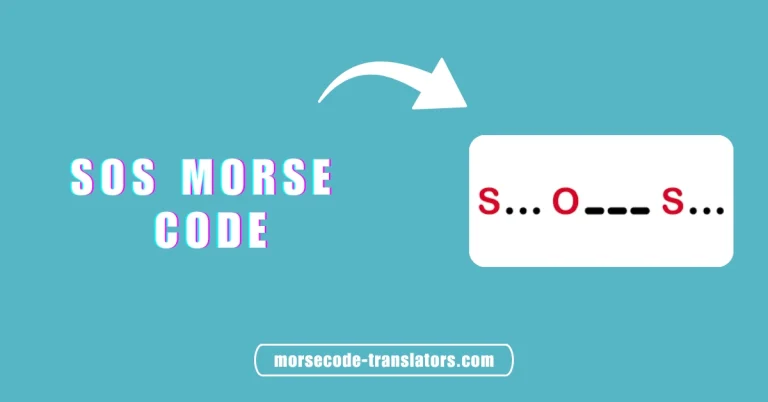
Among the most recognized Morse code messages is the famous SOS signal, represented as ··· --- ···. Many people associate SOS with phrases like "Save Our Ship" or "Save Our Souls," but the signal was actually chosen because its simple and repeating pattern made it easy to recognize during emergencies. Its clear structure allowed operators to identify distress calls quickly, even when communication conditions were difficult. Understanding morse code sos meaning provides insight into how a simple sequence of signals became one of the most powerful emergency communication methods in history.
The strength of Morse code comes from its adaptability. Unlike communication systems that depend on a single technology, Morse code can be transmitted in many different ways. It can be sent through radio signals, flashing lights, sounds, electrical pulses, and even physical tapping. This flexibility allowed it to remain useful in situations where other communication methods failed. During emergencies, natural disasters, and remote operations, Morse code has continued to demonstrate its reliability because it requires minimal equipment while still allowing meaningful messages to be transmitted.
Beyond communication, Morse code has educational value because it teaches important skills such as pattern recognition, memory, logical thinking, and problem-solving. Learning the system requires understanding relationships between symbols and meanings, which develops the same type of structured thinking used in programming and engineering. Students studying technology, electronics, and communication systems often explore Morse code because it provides a simple introduction to how information can be represented and transferred.
Morse code also played an important role in the development of information technology concepts. The idea of representing complex information through simple symbolic patterns influenced later advancements in digital communication. Modern systems use advanced forms of encoding and data transmission, but the basic concept remains similar: information is transformed into a structured format, transferred through a medium, and interpreted by a receiving system.
Even in today's digital world, Morse code has not disappeared. Amateur radio operators continue using it because of its ability to perform well under weak signal conditions. Aviation, maritime communication, emergency services, and specialized communication fields still recognize its historical and practical importance. Its continued survival demonstrates that effective communication is not always about complexity; sometimes the most powerful systems are those built on simple, reliable principles.
The legacy of Morse code extends far beyond the telegraph era. It helped establish the foundation for modern telecommunications by proving that information could be converted into signals and transmitted across great distances. Concepts such as standardized communication protocols, signal processing, and information encoding all share similarities with the ideas introduced by Morse code.
In today's interconnected world, where smartphones, satellites, and high-speed internet dominate communication, Morse code remains a symbol of innovation and human creativity. It represents the moment when humanity discovered a new way to overcome distance and share information instantly. The system may appear simple compared to modern technology, but its influence can still be found throughout digital communication networks.
In conclusion, Morse code is much more than a historical signaling method. It is a revolutionary invention that changed how humans communicate, introduced important concepts in information technology, and influenced the development of modern digital systems. From early telegraph networks to today's advanced communication infrastructure, its principles of accuracy, structure, and standardization continue to inspire innovation. The enduring importance of Morse code proves that even the simplest ideas can create worldwide transformations and leave a lasting impact for generations. For more check ot: https://morsecode-translators.com/sos-in-morse-code/
Morse code stands as one of the most remarkable inventions in the history of human communication. Developed during the nineteenth century through the groundbreaking efforts of Samuel Morse and other contributors to telegraph technology, it completely transformed the way people exchanged information across long distances. Before Morse code existed, sending messages between distant locations depended mainly on physical transportation methods such as letters, messengers, ships, and railway couriers. Important information could take days, weeks, or even months to reach its destination, creating major challenges for governments, businesses, military organizations, and ordinary people.
The introduction of Morse code changed communication forever by creating a simple yet powerful system that converted written language into patterns of short and long signals known as dots and dashes. These signals could travel through electrical wires, sound waves, flashes of light, radio transmissions, and other forms of communication. For the first time in history, messages could move almost instantly across enormous distances, creating a new era where information traveled faster than physical transportation. This breakthrough became one of the earliest foundations of modern telecommunications and influenced many technologies that followed.
The brilliance of Morse code lies in its simplicity and efficiency. Instead of requiring complex equipment or advanced technology, it used a structured system where every letter, number, and symbol was represented by a unique combination of dots and dashes. This standardized format allowed trained operators from different countries and backgrounds to exchange messages accurately without depending on spoken language. The universal nature of the system made Morse code one of the earliest examples of a global communication standard.
One of the most important characteristics of Morse code is the precision required for accurate communication. Every signal, pause, and spacing interval carries meaning, meaning that even a small mistake can completely change the message being transmitted. Operators had to develop exceptional concentration, timing, and attention to detail to ensure information was delivered correctly. These same principles are still essential in modern technology fields such as software development, cybersecurity, digital networking, and data transmission, where accuracy and consistency determine whether systems function properly.
Morse code also introduced ideas that closely connect with modern computer science. The process of converting information into a specific format, transmitting it through a communication channel, and decoding it at the destination reflects the same basic principles used in today's digital systems. Modern computers, internet networks, and communication technologies rely on similar concepts of encoding, processing, and interpretation. Although today's systems are far more advanced, the fundamental idea of transforming information into structured signals remains closely connected to the principles established by Morse code.
The historical importance of Morse code can be seen through its impact on global society. Once telegraph networks expanded, businesses could coordinate operations faster, governments could communicate more efficiently, newspapers could share information quickly, and transportation systems could improve safety through faster messaging. Maritime communication especially benefited from Morse code because ships could exchange important information across oceans, request assistance, and send emergency signals when facing dangerous situations.
Among the most recognized Morse code messages is the famous SOS signal, represented as ··· --- ···. Many people associate SOS with phrases like "Save Our Ship" or "Save Our Souls," but the signal was actually chosen because its simple and repeating pattern made it easy to recognize during emergencies. Its clear structure allowed operators to identify distress calls quickly, even when communication conditions were difficult. Understanding morse code sos meaning provides insight into how a simple sequence of signals became one of the most powerful emergency communication methods in history.
The strength of Morse code comes from its adaptability. Unlike communication systems that depend on a single technology, Morse code can be transmitted in many different ways. It can be sent through radio signals, flashing lights, sounds, electrical pulses, and even physical tapping. This flexibility allowed it to remain useful in situations where other communication methods failed. During emergencies, natural disasters, and remote operations, Morse code has continued to demonstrate its reliability because it requires minimal equipment while still allowing meaningful messages to be transmitted.
Beyond communication, Morse code has educational value because it teaches important skills such as pattern recognition, memory, logical thinking, and problem-solving. Learning the system requires understanding relationships between symbols and meanings, which develops the same type of structured thinking used in programming and engineering. Students studying technology, electronics, and communication systems often explore Morse code because it provides a simple introduction to how information can be represented and transferred.
Morse code also played an important role in the development of information technology concepts. The idea of representing complex information through simple symbolic patterns influenced later advancements in digital communication. Modern systems use advanced forms of encoding and data transmission, but the basic concept remains similar: information is transformed into a structured format, transferred through a medium, and interpreted by a receiving system.
Even in today's digital world, Morse code has not disappeared. Amateur radio operators continue using it because of its ability to perform well under weak signal conditions. Aviation, maritime communication, emergency services, and specialized communication fields still recognize its historical and practical importance. Its continued survival demonstrates that effective communication is not always about complexity; sometimes the most powerful systems are those built on simple, reliable principles.
The legacy of Morse code extends far beyond the telegraph era. It helped establish the foundation for modern telecommunications by proving that information could be converted into signals and transmitted across great distances. Concepts such as standardized communication protocols, signal processing, and information encoding all share similarities with the ideas introduced by Morse code.
In today's interconnected world, where smartphones, satellites, and high-speed internet dominate communication, Morse code remains a symbol of innovation and human creativity. It represents the moment when humanity discovered a new way to overcome distance and share information instantly. The system may appear simple compared to modern technology, but its influence can still be found throughout digital communication networks.
In conclusion, Morse code is much more than a historical signaling method. It is a revolutionary invention that changed how humans communicate, introduced important concepts in information technology, and influenced the development of modern digital systems. From early telegraph networks to today's advanced communication infrastructure, its principles of accuracy, structure, and standardization continue to inspire innovation. The enduring importance of Morse code proves that even the simplest ideas can create worldwide transformations and leave a lasting impact for generations. For more check ot: https://morsecode-translators.com/sos-in-morse-code/

 Arabic
 Français
 Español
 Português
 Deutsch
 Türkçe
 Dutch
 Italiano
 Russian
 Romaian
 Portuguese (Brazil)